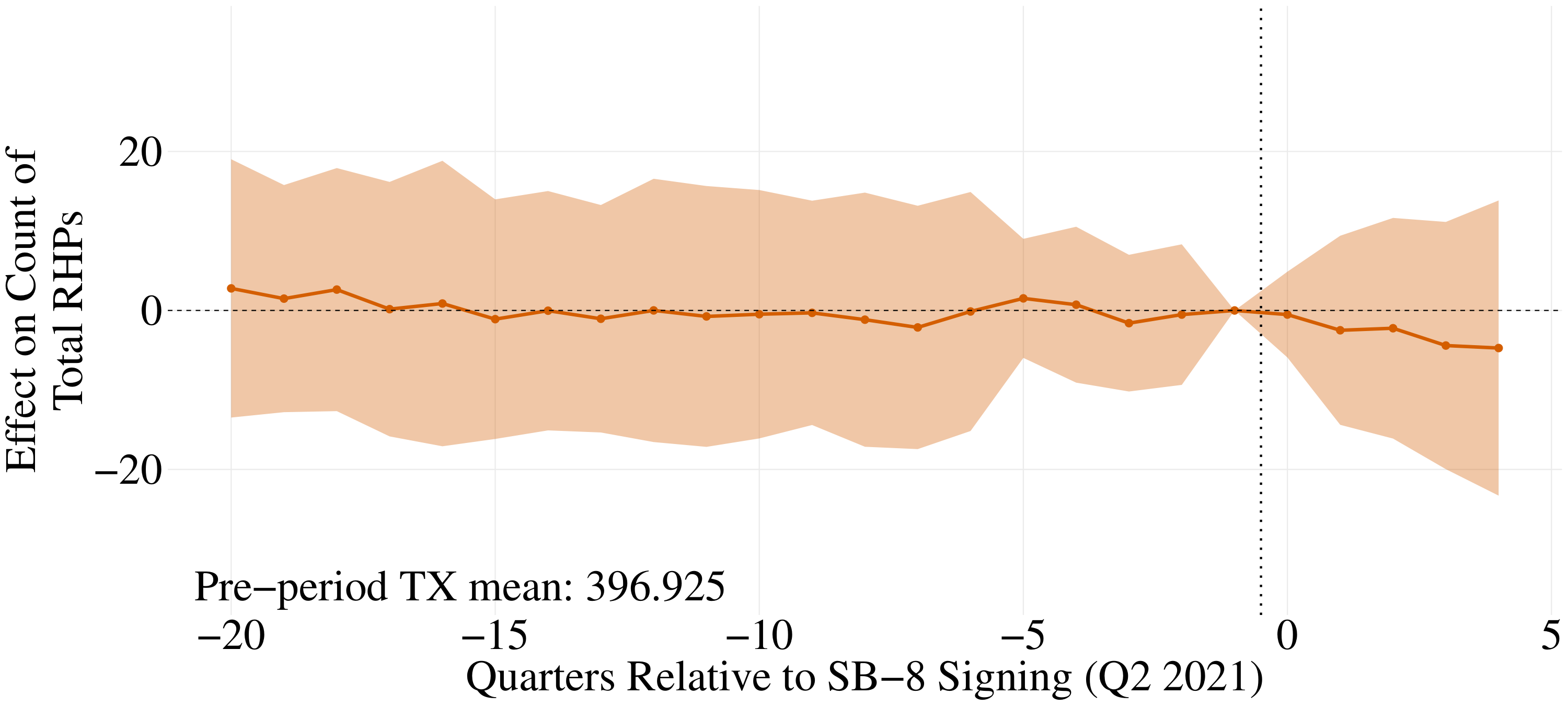
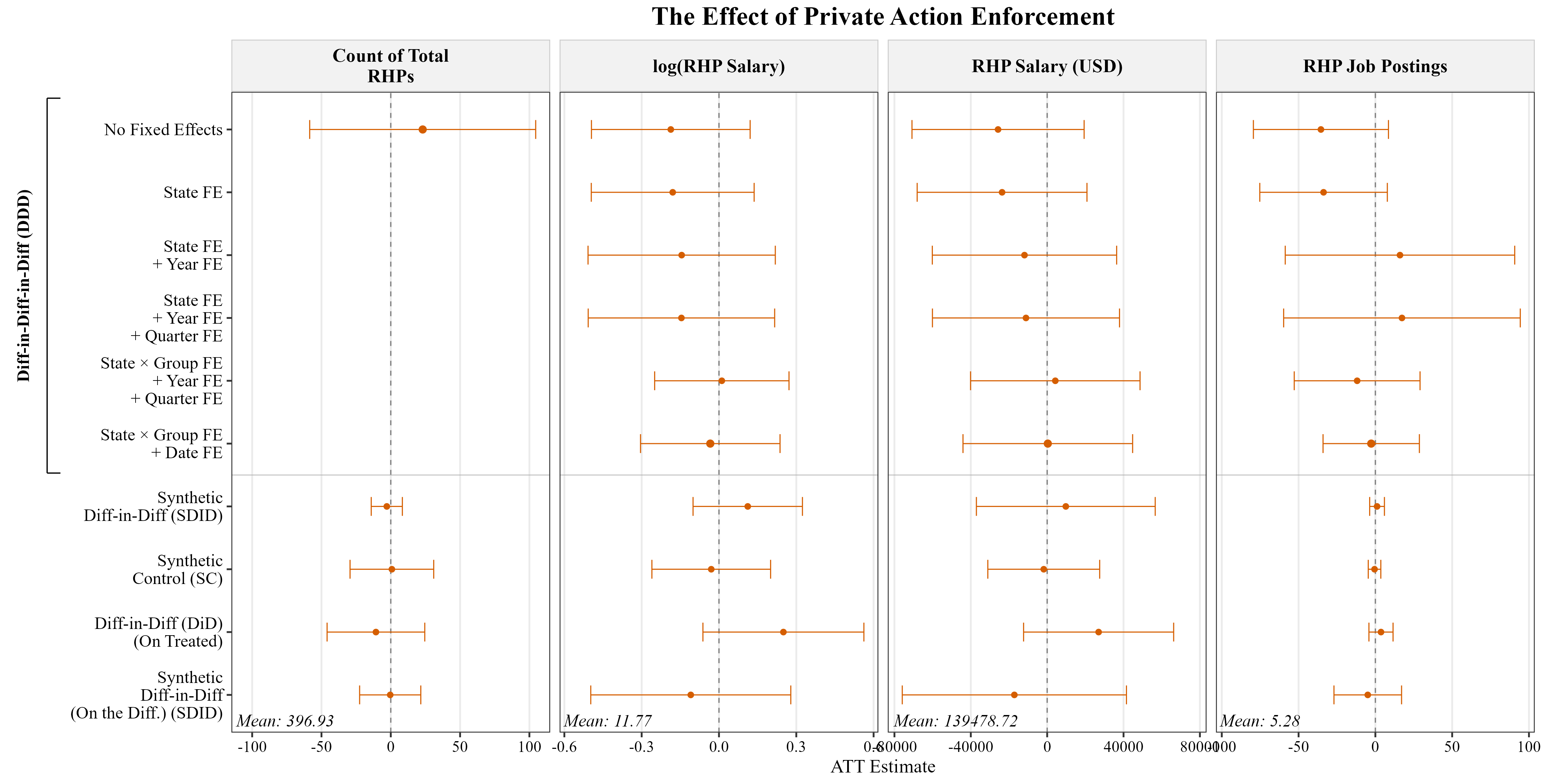
This paper studies the labor market effects of private liability enforcement using Texas Senate Bill 8 (SB-8, 2021) as a natural experiment. A private enforcement mechanism in this context allows any citizen to sue anyone who aids or abets a prohibited abortion for minimum damages of $10,000. This practice lowers the evidentiary burden and expands the pool of potentially liable individuals, which raises expected operating costs and could incentivize out-migration for a broad set of physicians compared to traditional state enforcement. We leverage variation across physician specialties, states, and time in a synthetic difference-in-differences (SDID) design to compare reproductive health physicians to all other physicians in Texas against similarly regulated states before and after SB-8's signing. We find that reproductive health physicians did not leave Texas at differential rates following SB-8. We can rule out an effect larger than 989 physicians moving, a 4.1% change relative to the pre-period baseline. For reference, we can rule out effects as large as those found in most of the contemporary literature on physician migration responses to state-enforced abortion restrictions. We also examine posted salaries and numbers of job offers and find no evidence of increased turnover nor compensating wage differentials under the risk of private enforcement. Our results provide a contrast to prominent media narratives of a large OB/GYN exodus from Texas.
Saving for a Rainy Day: Experimental Evidence on Prize-Linked Saving and Financial Shocks
(Under Review)
Presented: Southern Economic Association Annual Meeting (2025); UTK Experiment and Theory Group Workshop (2023); UTK Applied Microeconomics Group Workshop (2023); UTK Graduate Student Research Seminar (2023); UTK Graduate Student Research Seminar (2022).
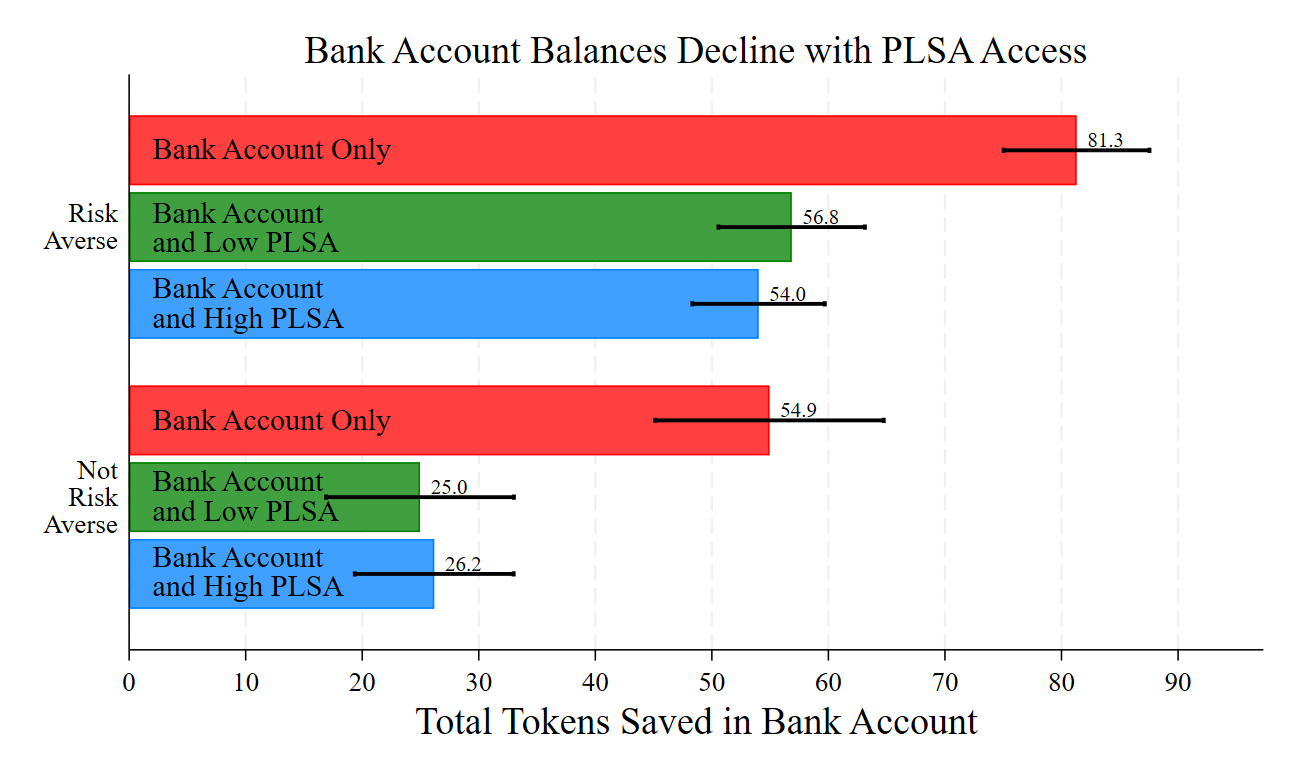
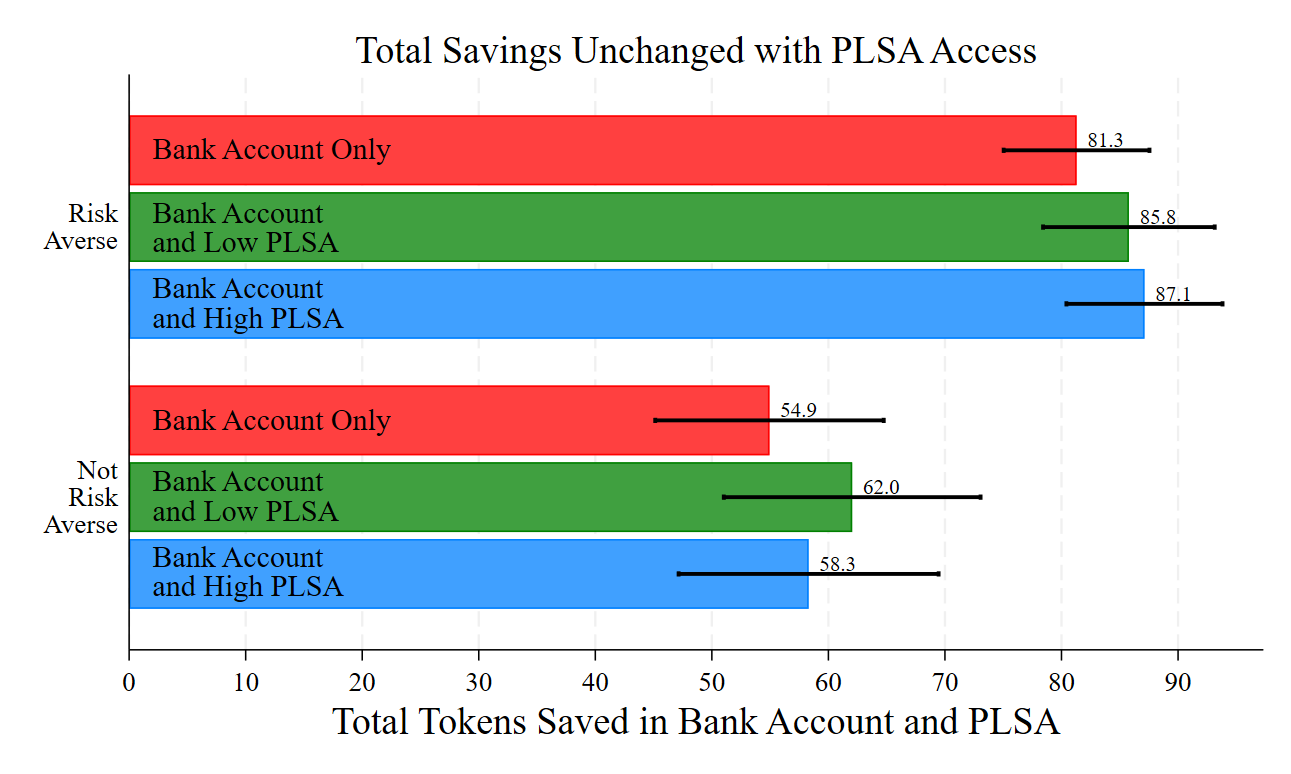
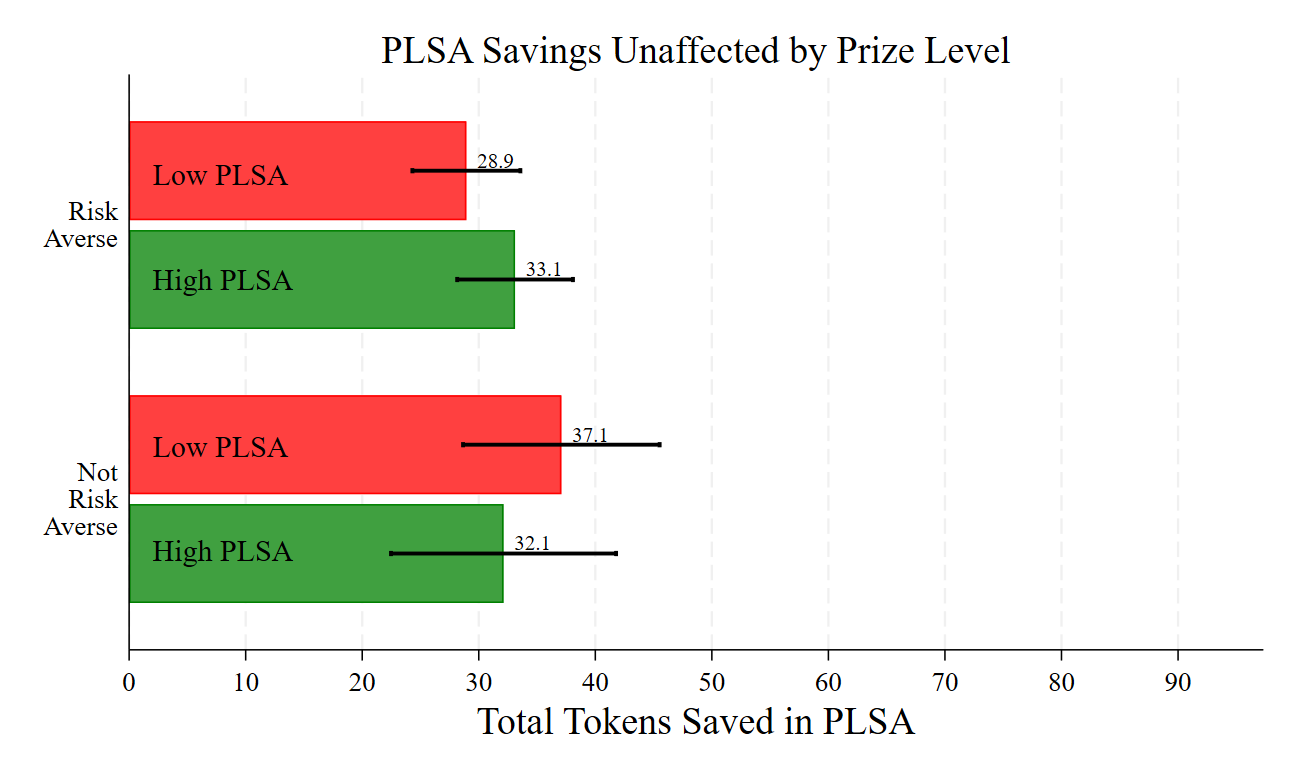
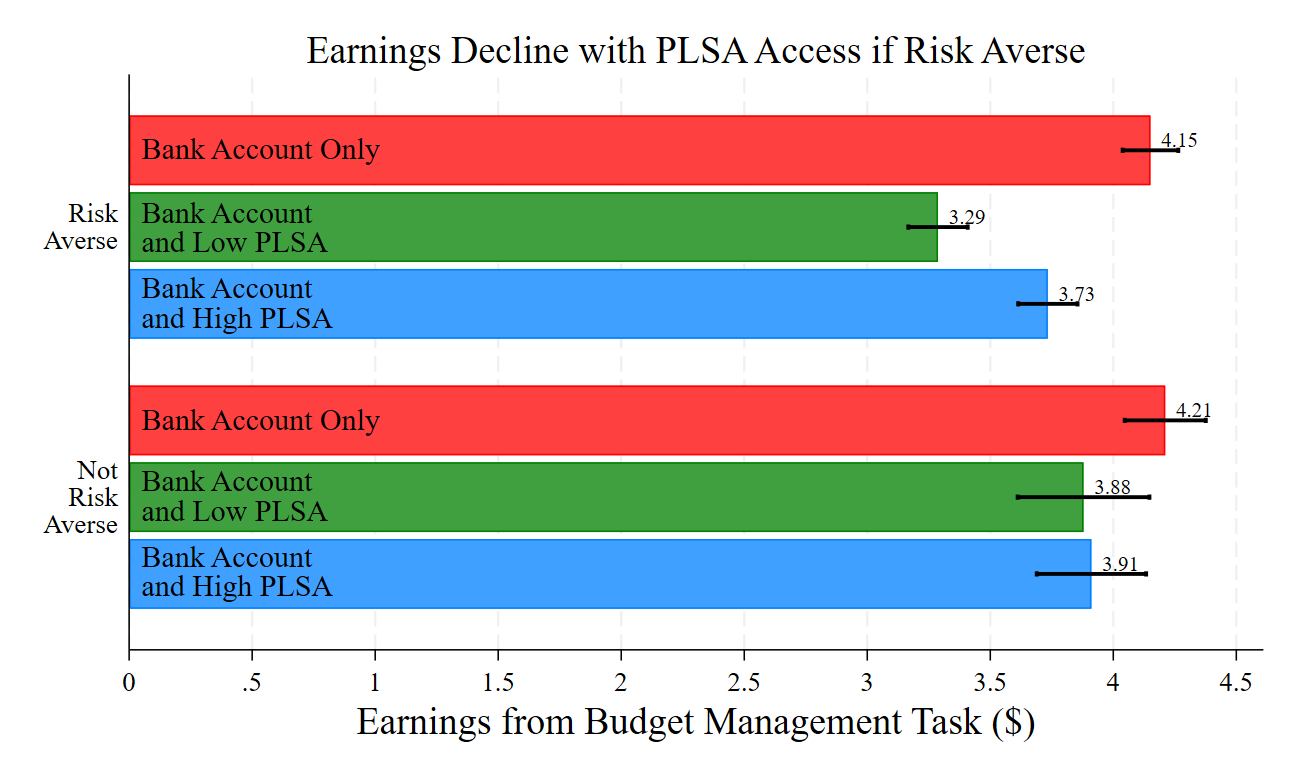
Liquidity constraints and inadequate precautionary savings create financial vulnerability for low-income households who face costly credit markets when unexpected expenses arise. This paper presents a laboratory experiment integrating a dynamic life-cycle savings model with prize-linked savings accounts (PLSAs, which offer lottery-style prizes in lieu of guaranteed interest) to investigate whether the behaviorally-motivated intervention can increase savings under financial uncertainty. I find that PLSAs crowd-out traditional savings accounts by 36.3 to 33.0 percent. Total savings do not increase. This portfolio reallocation imposes costs in the low prize treatment: participants earn 16.7 percent less than control, with the largest crowding-out effects concentrated among not risk averse individuals who exhibit 43.3 percent reductions in traditional savings. PLSAs function primarily as portfolio substitutes rather than savings-creation tools. Heterogeneity across risk preferences suggests that PLSAs should be marketed to unbanked households who are not risk averse.
Papers in Progress
The Economic Impact of Unemployment Insurance Reform in Tennessee
In 2024, Tennessee changed the generosity and duration of Unemployment Insurance (UI) benefits. For the last 20 years, UI-eligible individuals who were displaced from their jobs could receive up to 60 percent of their previous wages up to $275 per week for a maximum of 26 weeks. For claims filed after Dec 1, 2023, individuals could receive up to $325 per week, but the duration of those benefits was shortened to as low as 12 weeks depending on the state's unemployment rate. In this project, we will examine the effects of this reform on both the state as a whole and also at the individual claimant level.