
Research - Kaden Grace
Working Papers
Saving for a Rainy Day: Experimental Evidence on Prize-Linked Saving and Financial Shocks (Click to view latest draft)
Abstract
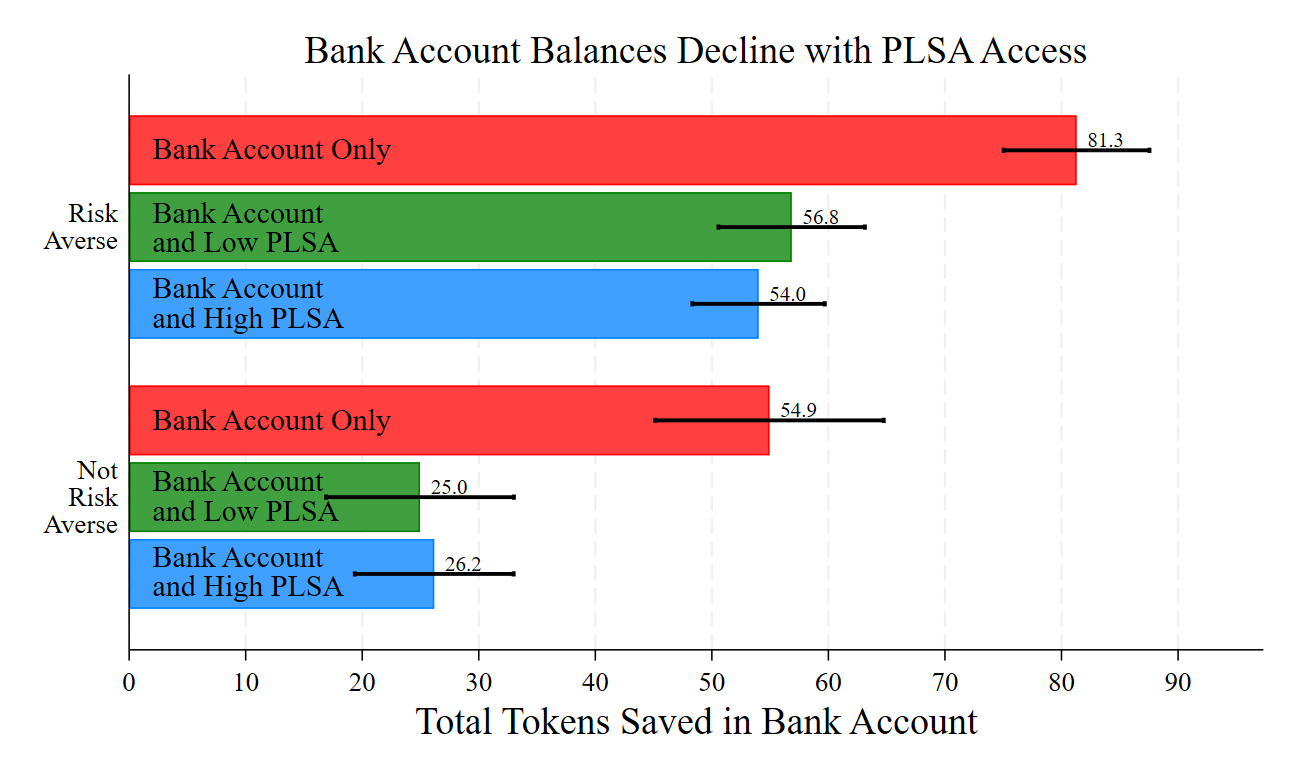
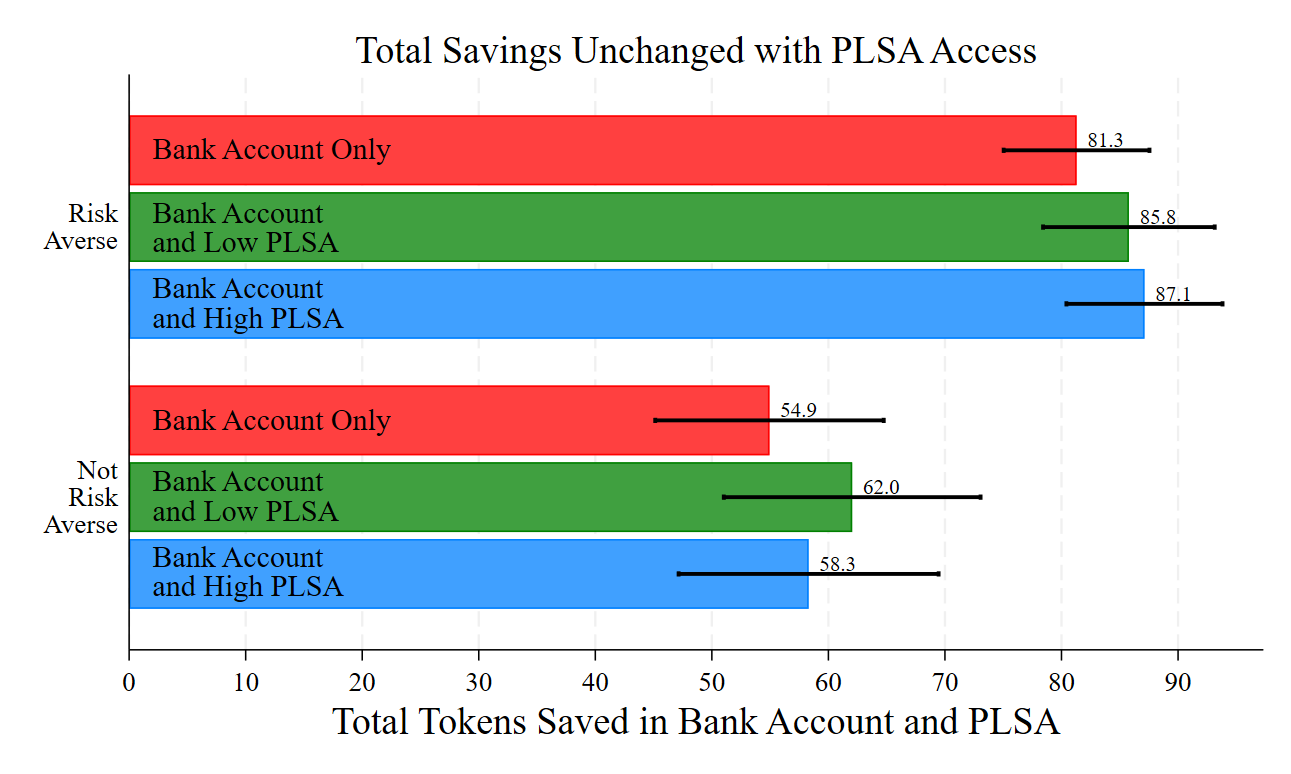
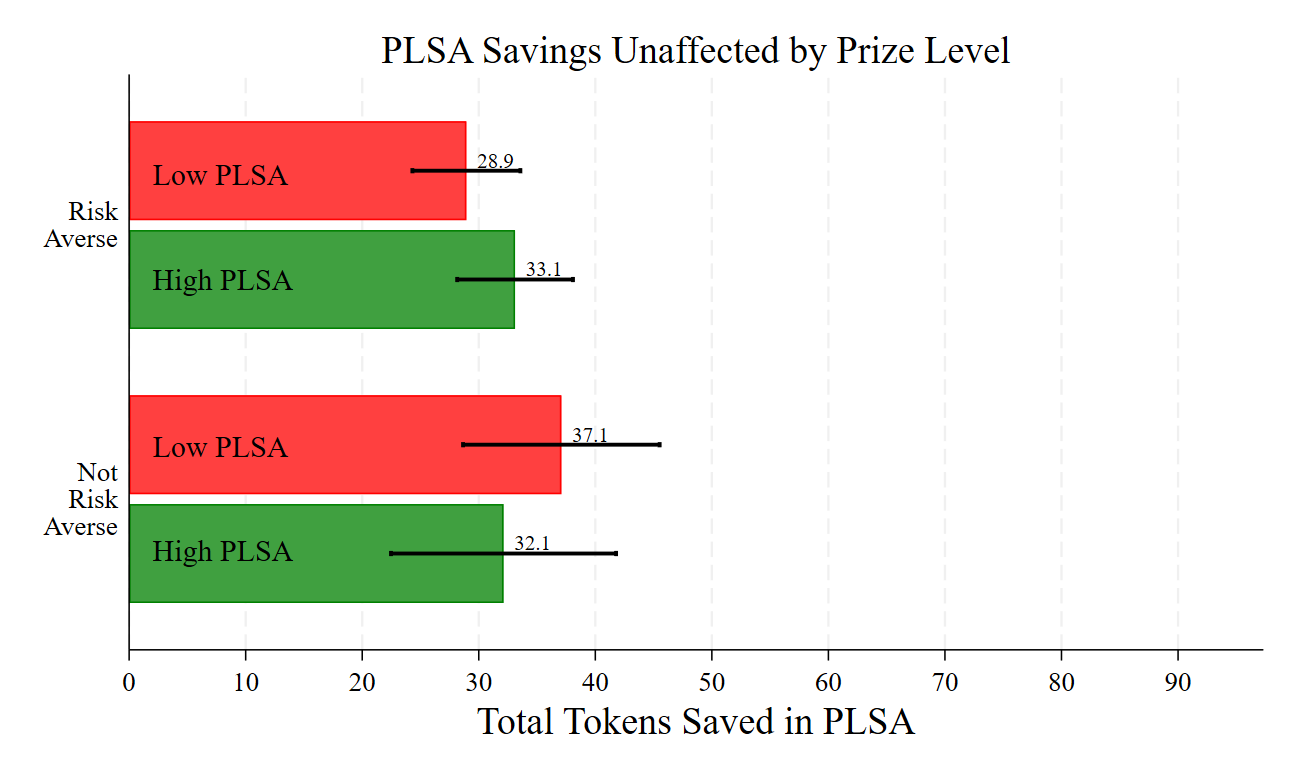
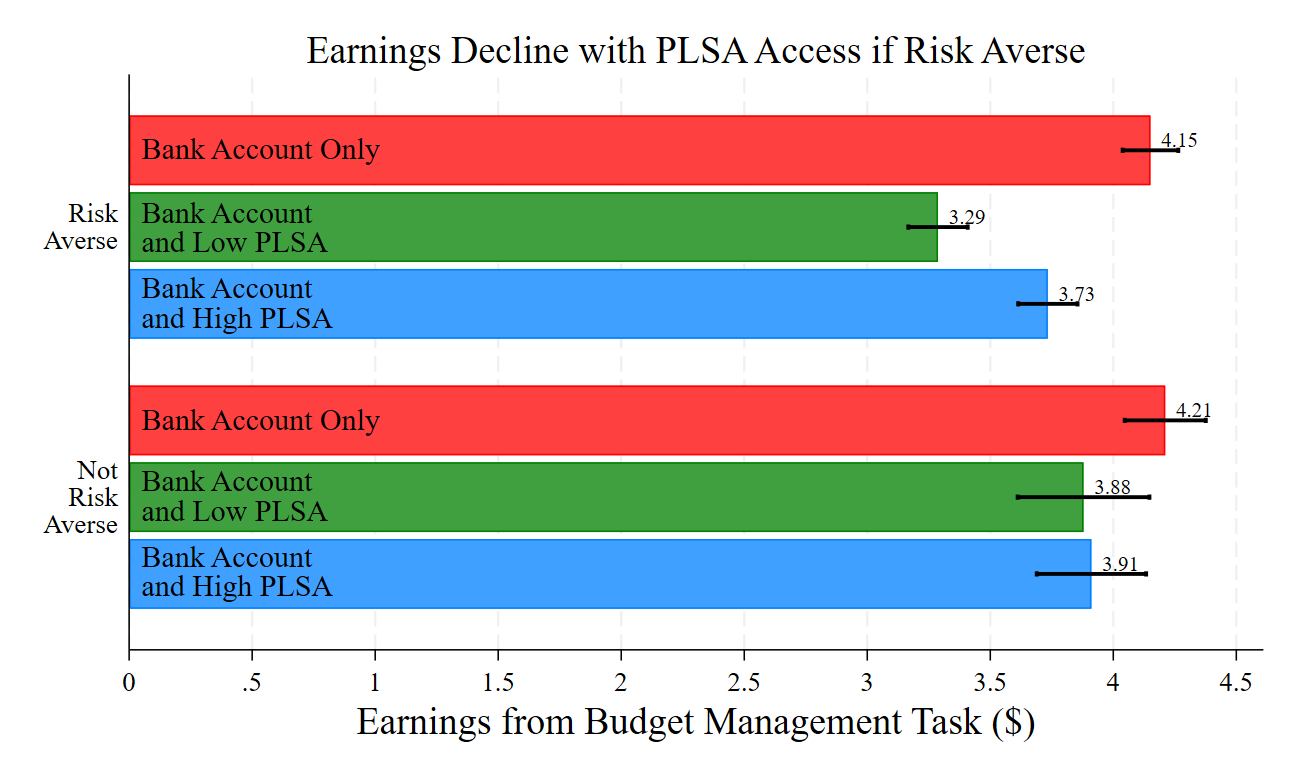
Liquidity constraints and inadequate precautionary savings create substantial financial vulnerability for low-income households who face costly or inaccessible credit markets when unexpected expenses arise. This paper presents a laboratory experiment integrating a dynamic life-cycle savings model with prize-linked savings accounts (PLSAs, which offer lottery-style prizes in lieu of guaranteed interest) to investigate whether the behaviorally-motivated intervention can increase savings under financial uncertainty. I find that PLSAs crowd-out traditional savings accounts by 38.5 to 33.6 percent. Total savings does not increase. This portfolio reallocation imposes costs: participants lose 9.1 to 17.8 percent of potential earnings by forgoing compound interest, with the largest effects concentrated among risk-seeking individuals who exhibit 93.7 percent crowding-out. PLSAs function primarily as portfolio substitutes rather than savings-creation tools. Heterogeneity across customer risk preferences suggests that PLSAs may be most attractive to risk-seeking households.
The Eyes of Texas are Upon OB/GYNs: Physician Migration and Crowdsourced Enforcement of Abortion Regulations
(with Martin Andersen)
Abstract
Texas Senate Bill 8, enacted in September 2021, introduced a novel enforcement mechanism for abortion restrictions. The law allowed any person to sue physicians who perform abortions after approximately six weeks of pregnancy for minimum damages of $10,000 per violation plus legal costs. This paper examines whether physicians, particularly obstetricians and gynecologists, left Texas in response to SB-8's civil liability provisions. We use Medicare administrative data on healthcare providers from November 2007 through June 2022, covering the nine-month period before the Supreme Court's Dobbs decision. The analysis compares the number of active OB/GYNs in Texas to other physician specialties, relative to the same comparison in other states. This triple-difference approach isolates the effect of SB-8 from broader trends affecting Texas or physicians nationally. We find a 1.47 percent reduction in active OB/GYNs in Texas during the nine months following SB-8. These findings demonstrate that civil liability mechanisms can influence physician location decisions, with implications for healthcare access in states considering similar enforcement approaches.
Papers in Progress
The Economic Impact of Unemployment Insurance Reform in Tennessee
(with Matt Harris, Larry Kessler, and Alex Norwood)
Abstract
In 2024, Tennessee changed the generosity and duration of Unemployment Insurance (UI) benefits. For the last 20 years, UI-eligible individuals who were displaced from their jobs could receive up to 60 percent of their previous wages up to $275 per week for a maximum of 26 weeks. For claims filed after Dec 1, 2023, individuals could receive up to $325 per week, but the duration of those benefits was shortened to as low as 12 weeks depending on the state's unemployment rate. In this project, we will examine the effects of this reform on both the state as a whole and also at the individual claimant level.